
Answer
Solar panel efficiency refers to how effectively a solar panel converts sunlight into usable electricity. Higher efficiency panels convert more sunlight into power per square foot, making them beneficial for roofs with limited space or specific energy goals. While precise payback periods vary by system size, energy usage, and current utility rates, higher efficiency often leads to greater energy production over the system’s lifespan. Our team regularly advises homeowners on panel choices that align with their property’s characteristics and energy needs.
Overview
Solar panel efficiency indicates how well a panel converts sunlight into usable electricity. Higher efficiency panels generate more power from a smaller area, which can be particularly useful for homes with limited roof space. This article explores how solar panel efficiency works and its influence on your home’s energy production.
We also present a labeled hypothetical scenario to illustrate how different factors impact solar energy systems, which you can find in the Real-World Example section.
- Local Panels: Learn about solar panel options for homes in Edmonton.
- Energy Output: See how panel efficiency affects your home’s energy generation.
- Smart Investment: Discover ways to maximize your solar return.
- Real-World Example: Compare different panel choices and their outcomes.
- Cost Recovery: Explore methods for calculating solar payback.
- Next Steps: Find out about your solar energy journey in the region.
Your Guide to Solar Panel Efficiency in Edmonton
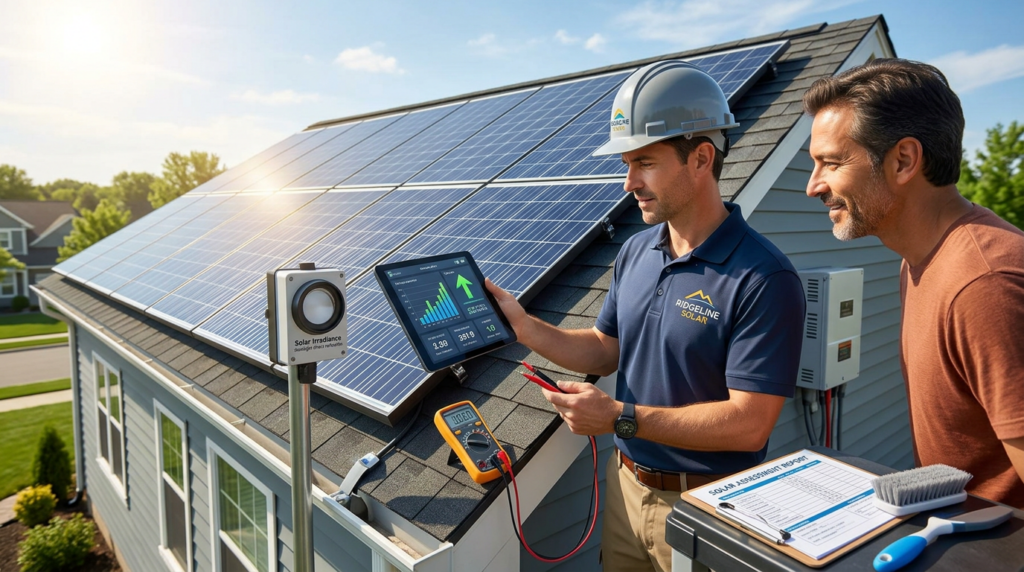
For homeowners in Edmonton, solar panel efficiency directly impacts how much energy your system produces from a given roof area. Ridgeline Solar helps local residents select panels that maximize generation, especially for properties with limited space or specific energy goals.
Higher efficiency panels convert more sunlight into electricity, making them a wise choice for many homes in the area. Our team considers factors like roof orientation, shading from urban trees, and seasonal weather patterns when designing each system. Our design process ensures optimal placement and performance for your property.
How Solar Panel Efficiency Impacts Your Home’s Energy Production
The efficiency rating of solar panels directly correlates with the amount of electricity your home system generates from sunlight. A higher solar panel efficiency means more power production from the same physical area on your roof, making it a key consideration for homes with limited space.
Factors beyond a panel’s efficiency rating also influence total energy output. Sunlight exposure, system orientation, and panel quality all play a role in how much power your solar array delivers. Our team designs each system to account for these elements, ensuring optimal performance for every installation.
Several elements combine to determine the overall energy production of your home’s solar system. Evaluating these points helps homeowners make informed choices about their solar investment.
| Factor | Impact on Energy Production |
|---|---|
| Sunlight Availability | Consistent exposure to direct sunlight maximizes power generation. Shading from trees or nearby structures reduces output. |
| Panel Orientation | South-facing roofs generally receive the most direct sunlight in the northern hemisphere, leading to higher production. Proper panel placement maximizes energy capture. |
| Temperature | Solar panels often perform better in cooler temperatures; extreme heat can slightly decrease efficiency. Edmonton’s cold winters can benefit panel performance. |
| Panel Quality | Higher quality panels maintain their efficiency over a longer lifespan, ensuring consistent production for many years. Selecting reliable brands offers lasting value. |
| Inverter Performance | The inverter converts DC power from panels to AC power for home use; an efficient inverter minimizes energy loss during this conversion. |
Maximizing Your Solar Investment: Understanding Efficiency
For homeowners with limited roof space, prioritizing solar panel efficiency offers a practical path to significant energy production. High-efficiency panels convert more sunlight into electricity per square foot, making them ideal for smaller available areas. This approach ensures you get the most power output from your system, even if your roof size is constrained.
Edmonton experiences substantial sunlight, averaging around 2,300 hours annually, with peak production during summer months. Additionally, the average annual solar radiation in the area is approximately 1,800 kWh/m², providing a strong foundation for solar energy generation. Investing in higher efficiency models can improve overall system performance and contribute to faster payback periods, especially when paired with local incentives Alberta solar incentives.
Our team at Ridgeline Solar helps homeowners weigh panel efficiency against other factors like cost and aesthetics. We consider specific roof dimensions and sun exposure to design systems that maximize your long-term energy savings. For instance, cold winters here can actually benefit solar panels; they perform more efficiently in cooler temperatures, contributing to consistent power generation throughout the year.
Choosing the Right Solar Panels: Efficiency vs. Other Factors
Selecting solar panels involves balancing various aspects beyond just efficiency. While high solar panel efficiency means more power from less space, factors like cost, durability, and aesthetics also play a significant role in making the right choice for your home. Our team helps homeowners weigh these considerations to align with their specific energy needs and budget.
For homes with limited roof area or specific power output goals, higher-efficiency panels become a stronger contender. Conversely, if you have ample roof space, a slightly less efficient panel might offer a better economic return over time. Local building codes may also influence the type and size of systems that can be installed, sometimes encouraging more efficient models to meet energy output goals in smaller footprints. Our installation process addresses these considerations.
Hypothetical scenario:
Consider two Edmonton homeowners: Homeowner A has a small, south-facing roof and aims for maximum energy production. Homeowner B has a large, unobstructed roof and seeks the lowest upfront cost for significant energy offset. Homeowner A might choose premium panels with 22% efficiency, maximizing output from their limited space. Homeowner B could select standard panels with 18% efficiency, achieving a similar total energy output with more panels across their larger roof, potentially at a lower initial cost per watt installed.
This table helps illustrate when different factors take precedence:
| If You Have These Conditions | Consider These Panels |
|---|---|
| Limited roof space, high energy demands | High-efficiency panels (20%+), maximizing output per square foot. |
| Ample roof space, budget-conscious | Standard efficiency panels (18-20%), balancing cost and performance. |
| Significant shading from trees or structures | Panels paired with microinverters or power optimizers for individual panel performance. |
| Long-term investment, seeking maximum output over decades | Panels with strong performance warranties and low degradation rates. |
Calculating the Payback Period for Efficient Solar Systems
Determining the payback period for a solar system helps homeowners weigh the initial investment against long-term energy savings. While higher-efficiency panels typically have a greater upfront cost, their increased energy production can shorten this period, particularly for properties with limited roof space.
We often find that maximizing generation within available roof area can lead to faster returns. Alberta offers incentives for solar panel installations, which directly impact the payback period by reducing upfront costs for homeowners.
-
Assess Initial Investment: Tally the total cost of the solar panel system, including panels, inverters, installation, and any associated electrical upgrades. This also considers the cost difference between standard and high-efficiency solar panel efficiency options.
-
Estimate Annual Energy Savings: Calculate how much electricity the system will generate annually and convert this into monetary savings based on your current utility rates. Our team can help you project your potential savings with a free solar assessment, factoring in local sunlight averages of about 2,300 hours annually.
-
Account for Incentives and Rebates: Subtract any available government incentives or rebates from the initial investment. The Alberta government offers various programs that can significantly reduce the net cost of installation. Explore provincial solar incentives.
-
Factor in Maintenance and Operating Costs: Include any projected annual costs for system maintenance or monitoring, though solar systems typically require minimal upkeep.
-
Calculate Payback: Divide the net initial investment (after incentives) by the annual net savings (energy savings minus operating costs) to arrive at the approximate payback period in years.
Next Steps for Your Solar Energy Journey in Edmonton
Beginning your journey to solar energy involves careful planning and selecting the right components for your home. Ridgeline Solar helps homeowners assess their energy needs and determine the most suitable solar panel efficiency ratings for their property. We guide you through the process, ensuring your system aligns with your goals for energy production and savings.
Exploring solar solutions means evaluating various factors beyond just the percentage of solar panel efficiency. We consider your roof size, local weather patterns, and specific energy consumption to design a system that performs optimally. Our team provides detailed consultations to address your questions about installation, maintenance, and available incentives for residents here. Learn about our installation process.
If you are ready to explore solar options, connect with our experts. We can provide a personalized assessment and quote tailored to your property. Request a solar quote today.
FAQ
To help you better understand solar panel efficiency and its implications for your home, we’ve compiled answers to some common questions you might have.
| Question | Answer |
|---|---|
| What makes high-efficiency solar panels a good choice for Edmonton homes with limited roof space? | High-efficiency solar panels convert more sunlight into electricity per square foot. This is beneficial for Edmonton homes where roof space may be limited. These panels help maximize energy production from the available area. |
| How does solar panel efficiency influence the time it takes to recoup the initial investment in Alberta? | Higher efficiency solar panels can lead to greater energy production over the system’s lifespan. This increased output, especially on limited roof space, can help shorten the payback period. Considering available Alberta incentives can further reduce the net initial cost. |
| What factors beyond efficiency should homeowners in Edmonton consider when choosing solar panels? | Homeowners should consider the cost of the panels, their durability, and their aesthetic appearance. Balancing these factors with efficiency is key to making the right choice for your home’s specific energy needs and budget. |
| How can I calculate the payback period for an efficient solar system in Edmonton? | To calculate the payback period, first determine the net initial investment after any incentives and rebates. Then, estimate your annual energy savings based on the system’s production and your current electricity rates. Divide the net investment by the annual savings to find the approximate payback time in years. |


