
Answer
Edmonton homes require specific considerations for energy monitoring system installations due to the city’s distinct climate and housing stock. For instance, older homes built before 1990 often present unique challenges and opportunities for energy efficiency improvements, making systems that track consumption and solar production invaluable. Ridgeline Solar has been providing these advanced solutions since 2016, partnering with local homeowners to offer detailed insights into energy usage and solar generation.
Overview
This section explores the intricacies of energy monitoring system installation in Edmonton, examining how the city’s climate and housing characteristics influence the process. Subsequent sections will detail the specific challenges faced by older homes, the impact of Edmonton’s unique weather patterns on system performance, and how to select the most appropriate energy monitoring approach.
Following this exploration, a real-world scenario illustrates a homeowner’s experience with system setup. We then detail Ridgeline Solar’s dedicated services and provide a local recommendation for homeowners considering energy monitoring solutions, concluding with guidance on the next steps for installation.
- Older Homes: Older residences in Edmonton present unique installation considerations, influencing sensor placement and thermal surveys. Older homes face specific issues.
- Climate Effects: Edmonton’s seasonal temperature swings and daylight hours impact energy demand and system performance. Climate affects performance.
- Approach Selection: Choosing the right energy monitoring system requires evaluating different types and their suitability for local needs. Selecting the right approach matters.
- Real-World Example: Arthur’s journey highlights practical considerations for system setup and its benefits. Arthur’s example shows the process.
- Ridgeline Solar: Discover the specialized energy monitoring services offered by Ridgeline Solar in the region. Ridgeline Solar’s services are available.
- Local Choice: This section offers a tailored recommendation for energy monitoring solutions within the area. Local choices are reviewed.
- Next Steps: Guidance is provided on the subsequent actions required for system installation. Installation steps are outlined.
Older Homes Face Energy Inefficiencies in Edmonton
Edmonton’s housing stock includes many homes built before 1990, which often feature older construction methods that lead to significant energy inefficiencies. These residences may have less insulation, original single-pane windows, and outdated electrical panels, all contributing to higher energy bills and reduced comfort. Understanding these existing conditions is the first step toward improving a home’s energy performance.
Many homes in mature Edmonton neighbourhoods, such as Strathcona and Garneau, were built with less stringent building codes than what is applied today. This means challenges like minimal insulation in walls and attics, and sometimes limited attic access, are common. Addressing these issues with modern energy monitoring systems helps pinpoint exact areas of heat loss or gain, guiding effective retrofit strategies. For example, during an energy monitoring system installation in Edmonton, technicians may need specialized equipment to assess narrow spaces without disturbing original finishes, a common requirement in these older homes.
| Local Constraints Impacting Older Homes | Installation Considerations |
|---|---|
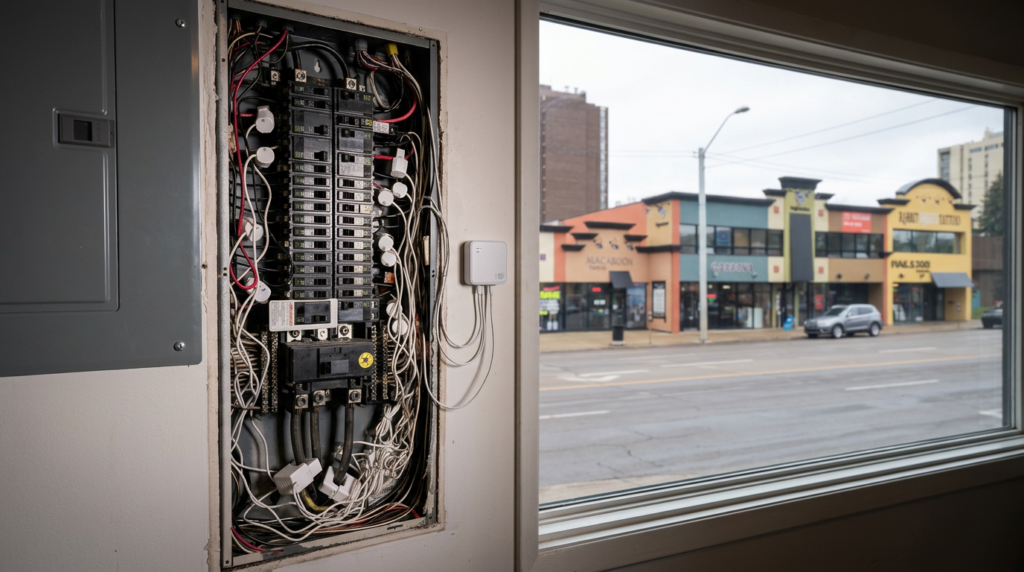
| Older wiring and legacy electrical panels in homes built before 1970, particularly in neighbourhoods like Highlands and Glenora. | Installers must account for the condition and capacity of existing electrical infrastructure. Safety checks and potential upgrades are necessary to support new monitoring hardware. |
| Mid-century bungalows often feature low-slope roofs, wide lots, and large front windows, impacting sensor placement and accessibility. | Sensors and gateways may need careful placement to avoid interfering with the home’s original layout or aesthetic, and to ensure optimal signal reception. |
| Established neighbourhoods like Ottewell commonly feature subdivision patterns from the 1950s and 1960s, influencing utility access and basement electrical runs. | Technicians must understand typical utility access points and basement layouts to efficiently map wiring and place monitoring components. |
| Large front yards and mature trees in areas like Laurier Heights can shade façades and windows. | Shading can affect the accuracy of external sensors and solar gain readings, necessitating careful placement and calibration of monitoring equipment to capture reliable data. |
| The presence of basements or “rumpus room” layouts in mid-century homes means monitoring systems may need to account for below-grade zones with different temperature and humidity behaviour. | Sensors placed in basements require consideration for unique environmental conditions and potential heat loss into foundation walls, which can be significant but hidden. |
Ridgeline Solar has been installing solar energy monitoring systems since 2016, partnering with Edmonton homeowners to provide advanced solar production and home-energy consumption tracking. Our services cover Edmonton and northern Alberta, ensuring homeowners can benefit from detailed insights into their home’s energy usage.
## Edmonton’s Climate Affects System Performance Edmonton’s significant temperature fluctuations and daylight variations present distinct installation windows and performance considerations for energy monitoring systems. The city’s climate directly influences how these systems operate and where sensors are best placed to capture accurate data throughout the year. Climate of Edmonton features long, bright summers and short, cold winters, impacting both installation scheduling and the energy usage patterns that monitoring systems track.
We have been installing solar energy monitoring systems since 2016, partnering with Edmonton homeowners to provide advanced solar production and home-energy consumption tracking via the Sense Solar Home Energy Monitor. Our team recognizes that the city’s seasonal shifts require careful planning for optimal system setup and data interpretation. For example, the extended daylight hours in summer can be advantageous for tasks like mounting external sensors, while the diminished sunlight in winter necessitates adjustments for effective data collection.
The long daylight hours Edmonton experiences during summer, up to 17 hours at the solstice, can be beneficial for scheduling outdoor installations and calibrations under consistent light. However, winter days significantly shorten, offering only 7–8 hours of daylight around the winter solstice. This impacts workflows for tasks that require good visibility, necessitating early morning or late afternoon work in sub-zero temperatures. Energy monitoring system installation in Edmonton requires an awareness of these seasonal constraints to ensure accuracy and efficiency.
| Climate Factor | Impact on Monitoring System Installation |
|---|---|
| Extreme Seasonal Temperatures (-40°C to 32°C) | Requires sensors and hardware rated for wide temperature ranges; potential for material expansion/contraction affecting calibration. |
| Short Winter Daylight Hours (7-8 hours) | Limits workable hours for outdoor installations and solar production monitoring, potentially requiring specialized lighting or workflow adjustments. |
| Long Summer Daylight Hours (up to 17 hours) | Allows for extended periods for site surveys and component mounting, potentially improving installation efficiency. |
| Freeze–Thaw Cycles | Can cause building envelope shifts, necessitating post-installation recalibration of thermal and moisture sensors for ongoing accuracy. |
| Snow Accumulation | May impact solar panel efficiency and access to roof-mounted sensors, requiring consideration for snow removal or protective sensor housings. |
Choosing the Right Energy Monitoring Approach
Selecting the appropriate energy monitoring system involves evaluating your specific needs for tracking solar production, home energy consumption, and potential future integrations. Homeowners in Edmonton have options ranging from basic usage trackers to advanced systems that offer granular device-level insights and predictive maintenance alerts. The right choice depends on your budget, technical comfort level, and the complexity of your home’s energy setup.
Considering systems that offer both solar generation and household energy usage tracking can provide a more complete picture of your home’s energy performance. For instance, the Sense Solar Home Energy Monitor, offered by Ridgeline Solar, integrates with your solar array and electrical panel. This allows for real-time insights into solar generation and household energy usage, helping you identify energy-intensive appliances and optimize consumption patterns.
When making this decision, consider what level of detail is most beneficial for your goals. Are you primarily looking to reduce overall electricity bills, maximize solar ROI, or detect potential electrical issues? Understanding these priorities will guide you toward a system that provides the most relevant data and actionable insights for your home.
| System Type | Best for | Budget | Reason |
|---|---|---|---|
| Basic Usage Tracker | Homeowners seeking a general overview of home electricity consumption. | Quote; varies with system features | Provides overall daily, weekly, or monthly usage data without specific appliance breakdown. |
| Device-Level Monitoring System | Homeowners wanting to identify individual appliance energy use and potential savings. | Quote; varies with system features | Offers detailed breakdowns of energy consumption by device, helping to pinpoint “energy hogs.” |
| Integrated Solar + Home Monitoring | Homeowners with solar installations who want to track both solar production and household usage in one platform. | Quote; varies with system features | Delivers comprehensive insights into how solar generation offsets consumption, enabling optimization of energy usage patterns for maximum savings. |
| Professional Electrician-Installed System | Homeowners preferring professional installation for safety and optimal integration with existing electrical panels and solar arrays. | Quote; varies with installation complexity | Ensures correct sensor placement, wiring, and system configuration, often necessary for complex setups or when required by local regulations. |
A Homeowner’s Experience with System Setup
Installing an energy monitoring system can provide homeowners with valuable insights into their energy consumption and solar production. However, choosing the right system and ensuring proper installation are critical for maximizing benefits.
Arthur is considering an energy monitoring system to better understand his home’s energy usage and his solar panel’s output. He’s unsure if he needs a specialized system that connects directly to his solar array or if a broader monitoring solution would suffice for his older Edmonton home. Should Arthur prioritize a system that integrates directly with his solar array for real-time production and consumption data, or a more general energy monitoring solution?
Recommendation: Sense Solar Home Energy Monitor
Ridgeline Solar recommends the Sense Solar Home Energy Monitor because it integrates directly with your solar array and electrical panel, offering granular, real-time insights into both solar generation and household energy usage. This system allows for identification of energy-intensive appliances and optimization of consumption patterns.
Ridgeline Solar’s Energy Monitoring Services
Ridgeline Solar offers specialized energy monitoring services designed for Edmonton homeowners, enhancing the value of solar panel installations. Since 2016, we have partnered with local residents to integrate advanced tracking systems that provide detailed insights into both solar production and overall home energy consumption. Our focus is on empowering you with real-time data to make informed decisions about your energy use.
We provide the Sense Solar Home Energy Monitor, a sophisticated device that connects directly to your solar array and electrical panel. This integration allows for granular tracking of energy flow, helping to pinpoint where energy is being used most, optimize consumption patterns, and ultimately maximize the savings from your solar investment. Our services extend across Edmonton and northern Alberta, ensuring reliable support for solar system performance tracking throughout the region.
| Product | Key Features | Benefits |
|---|---|---|
| Sense Solar Home Energy Monitor | Real-time solar production tracking Household energy consumption monitoring Appliance-level energy usage identification Integration with solar arrays and electrical panels |
Identify energy “hogs” Optimize consumption patterns Maximize solar savings Gain granular insights into energy flow |
Local Recommendation for Energy Monitoring
For homeowners in the energy monitoring system installation edmonton area, selecting the right system hinges on your specific needs for tracking solar production alongside household energy consumption. The Sense Solar Home Energy Monitor offers a robust solution, integrating directly with solar arrays and electrical panels to provide granular, real-time insights.
We offer the Sense Solar Home Energy Monitor, which empowers you to identify energy “hogs,” optimize consumption patterns, and maximize savings. Our energy monitoring services cover Edmonton and northern Alberta, ensuring broad regional support for solar system performance tracking.
| Product | Best for | Budget | Reason |
|---|---|---|---|
| Sense Solar Home Energy Monitor | Homeowners seeking detailed insights into both solar generation and household energy usage | Quote; varies with system size and installation complexity | This system integrates directly with your solar array and electrical panel, offering granular, real-time data to pinpoint energy-intensive appliances and optimize consumption patterns. |
| Sense Solar Home Energy Monitor | Maximizing savings through detailed solar production and home energy usage analysis | Quote; varies with system size and installation complexity | It empowers homeowners to identify specific appliances driving up electricity bills and adjust usage habits for greater efficiency. |
| Sense Solar Home Energy Monitor | Tracking solar array performance and overall home energy consumption | Quote; varies with system size and installation complexity | This monitor provides the real-time data necessary to understand how your solar system contributes to your energy needs and identify areas for potential savings. |
| Sense Solar Home Energy Monitor | Homeowners in Edmonton looking to understand their energy patterns and improve efficiency | Quote; varies with system size and installation complexity | The system’s ability to track granular usage data makes it ideal for identifying hidden energy drains in older homes or optimizing the performance of newer, high-efficiency systems. |
For energy monitoring system installations in Edmonton, we can be reached for quotes and consultation on the Sense Solar Home Energy Monitor.
Next Steps for System Installation
Scheduling and preparing for your energy monitoring system installation in Edmonton involves a few key actions to ensure a smooth process. Understanding these steps helps homeowners prepare for the installation day and maximize the system’s benefits from the start. Ridgeline Solar handles the technical details, but your preparation ensures everything proceeds efficiently.
The installation of an energy monitoring system typically involves a licensed electrician to connect sensors to your main electrical panel. This process requires clear communication regarding your home’s setup and your specific energy monitoring goals. Following these guidelines ensures the installation aligns with your needs.
- Book your consultation and installation appointment.
- Prepare access to your electrical panel and solar array.
- Confirm system configuration and desired monitoring features.
We have been installing solar energy monitoring systems since 2016, partnering with Edmonton homeowners to provide advanced solar production and home-energy consumption tracking via the Sense Solar Home Energy Monitor. Our team ensures that each installation is tailored to your home’s unique electrical setup.
| Product | Best for | Budget | Reason |
|---|---|---|---|
| Sense Solar Home Energy Monitor | Homeowners seeking detailed insights into both solar generation and household energy usage. | Quote; varies with system complexity and electrical panel specifics. | This system empowers users to identify energy-intensive appliances and optimize consumption patterns, offering a comprehensive view of home energy performance. |
| Sense Solar Home Energy Monitor | Those looking to maximize savings by optimizing energy consumption patterns and solar generation. | Quote; varies with system complexity and electrical panel specifics. | It provides granular, real-time data that helps pinpoint areas of high usage, allowing for informed adjustments to reduce overall electricity costs. |
FAQ
To help you better understand the process and advantages, we’ve compiled answers to some common questions regarding energy monitoring system installation Edmonton homeowners often ask.
| Question | Answer |
|---|---|
| How does Edmonton’s older housing stock affect energy monitoring system installation? | Many Edmonton homes built before 1990 have older wiring and legacy electrical panels, requiring installers to check and potentially upgrade existing infrastructure. Mid-century bungalows often have specific roof and window designs that influence where sensors and gateways can be placed for optimal performance and to maintain the home’s original layout. |
| What are the key benefits of integrated solar and home energy monitoring systems in Edmonton? | Integrated systems provide a complete view by tracking both solar generation and household energy consumption in real-time. This allows homeowners to see how solar power offsets usage, identify specific appliances that consume the most energy, and optimize their consumption patterns for maximum savings. |
| When is the best time of year for energy monitoring system installation in Edmonton? | Summer months offer longer daylight hours, which can be beneficial for outdoor tasks like mounting external sensors and calibrating equipment. Winter days have significantly shorter daylight, potentially shortening workable hours for installations and requiring adjustments for tasks needing good visibility. |
| Should I choose a system that requires professional installation for my Edmonton home? | A professional installation is recommended for systems that integrate directly with your electrical panel and solar array. This ensures correct sensor placement, secure wiring, and optimal system configuration, which is often necessary for safety and to comply with any local requirements for such installations. |


