
Answer
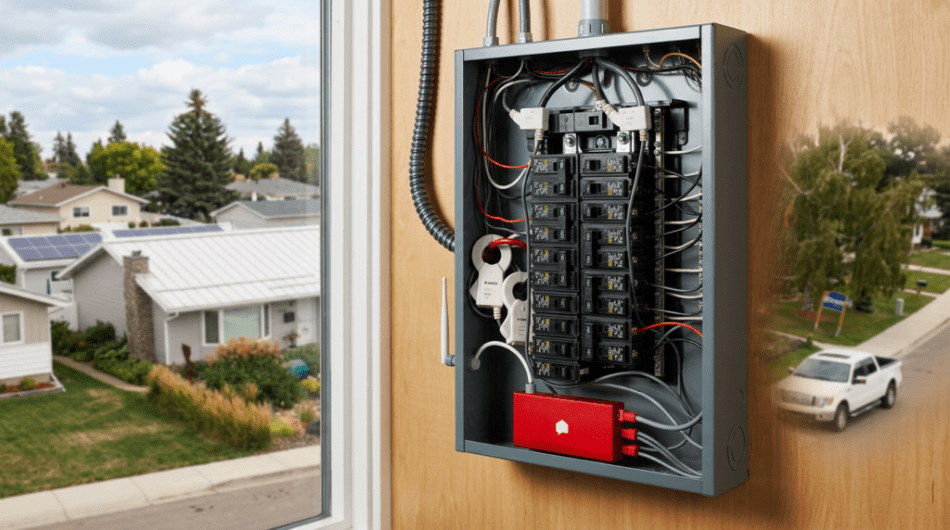
Ridgeline Solar has been installing energy monitoring systems in Edmonton since 2016, providing homeowners with device-level analytics and real-time insights into their energy consumption and solar output. Through the Sense app, residents can identify energy-intensive appliances, monitor solar efficiency, and adjust usage patterns to maximize savings. Our expert technicians manage the complete installation and setup, ensuring seamless integration with existing or new solar panel systems.
Overview
This exploration details the specifics of energy monitoring system installation within the Edmonton area. It covers the unique challenges installers face locally, the impact of Edmonton’s climate and housing stock on installations, and how to select the right system for a home. The piece also includes a real-world example of a homeowner’s experience and recommendations for local energy monitoring services.
For a closer look at how these systems can benefit homeowners, consider the case of Arthur, an Edmonton resident seeking to optimize his home’s energy usage and solar production. His situation highlights the practical considerations involved in choosing and installing an energy monitoring system.
- Local Challenges: Discover the specific difficulties installers encounter when performing energy monitoring system installation in Edmonton local challenges.
- Climate Impact: Learn how Edmonton’s distinct weather patterns and housing styles influence the installation process climate impact.
- System Selection: Get advice on choosing the appropriate energy monitoring system for residential use.
- Real-World Example: See a practical scenario illustrating the installation and benefits of an energy monitoring setup Arthur’s experience.
- Local Services: Find out about the energy monitoring system services offered by local providers.
- Recommendations: Explore suggestions for energy monitoring solutions tailored to the Edmonton area local recommendations.
- Next Steps: Get guidance on what to do next for your energy monitoring system installation.
Energy Monitoring System Installation Edmonton: Local Challenges
Installing an energy monitoring system in Edmonton homes presents distinct challenges related to the city’s unique building stock and climate. Many residences, particularly those in established neighborhoods like Strathcona and Garneau, were built between the 1910s and 1950s. These older homes often feature narrow attic access points and require installers to use compact sensor mounts and flexible wiring kits to navigate around low-clearance joists.
Furthermore, the varied architectural styles across Edmonton require specific installation approaches. Homes in the West end, such as Glenora and Westmount, may have low-pitch asphalt shingle roofs that accumulate significant snow, influencing the optimal timing for rooftop gateway module installations—typically scheduled for late spring or early fall. For properties with stucco exteriors over masonry block, like those in neighborhoods along 124 Street NW, specialized anchors are needed to secure outdoor display panels without compromising the finish.
Our expert technicians handle the complete installation and setup of energy monitoring systems, ensuring seamless integration with existing electrical infrastructure. We take into account these local factors to ensure a smooth and effective setup for every Edmonton homeowner. To request a quote for your energy monitoring system installation in Edmonton, please call us at (780) 499-6831.
Edmonton’s Climate and Housing Impact on Installs
Edmonton’s distinct climate and varied housing stock present unique considerations for energy monitoring system installation. Extreme temperature fluctuations, from frigid winters to warm summers, influence both the equipment’s performance and the homeowner’s energy usage patterns. Many homes in established neighborhoods, often built in the mid-20th century, may have older wiring or less accessible infrastructure that requires careful planning by installers.
The city’s housing stock includes a mix of styles, from older bungalows with potentially limited attic access to newer infill homes designed with modern energy efficiency standards. For instance, many homes built before 2000 feature 2×4 walls with R10 to R12 fiberglass batt insulation, which falls short of current R22 codes. This highlights areas where energy monitoring can pinpoint significant heat loss, guiding homeowners toward impactful upgrades. Similarly, the presence of mature trees in established neighborhoods can affect equipment placement and may require installers to adapt routes to avoid disturbing existing landscaping.
| Pros | Cons |
|---|---|
| Homes in older communities like Glenora or Strathcona, often built between the 1910s and 1950s, may benefit from energy monitoring systems that can identify heat loss through older windows or inefficient insulation, offering clear paths for improvement. | Older homes in areas like Glenora, Westmount, or Strathcona may have outdated wiring or less accessible infrastructure, requiring specialized installation approaches for energy monitoring systems. |
| Newer infill homes in communities such as The Meadows, built to meet Alberta Building Code airtightness targets, can integrate whole-home energy monitors without additional assessments, leveraging existing blower-door test data. | Newer infill homes, while efficient, may already incorporate features like solar panels, requiring energy monitoring systems that can provide detailed insights into these integrated green technologies. |
| Edmonton’s long summer daylight hours (up to 17 hours) provide significant potential for solar energy production, making energy monitoring systems particularly useful for tracking generation, consumption, and excess energy returned to the grid. | The city’s extreme temperature swings, with winter lows below –30 °C, mean installers must use heat-shrink junction boxes and low-temperature-rated conduit to prevent equipment failure and ensure reliable performance of energy monitoring devices. |
| Homeowners in areas with south-facing windows, common in neighborhoods like Laurier Heights, can use energy monitoring to track when passive solar gain offsets furnace demand, optimizing heating system usage. | Steeply pitched roofs and attic windows in neighborhoods such as McCauley can complicate attic access, making the monitoring of upper-level heat loss a relevant consideration during winter installations. |
## Choosing the Right Energy Monitoring System for Your Home Selecting an energy monitoring system involves weighing your specific needs against the available features and your home’s unique characteristics. For homeowners in Edmonton, considerations like climate, home age, and existing solar infrastructure play a significant role in determining the most suitable system. Understanding these factors helps ensure the chosen monitor provides actionable data for efficiency and savings. The complexity of installation can vary greatly depending on the system type. Some monitors offer straightforward DIY setup, involving clipping sensors onto existing electrical lines. Others, particularly those that integrate directly with your main electrical panel or solar array, may require professional installation to ensure safety and proper function. electric vehicle charger installations, for example, often need to be coordinated with overall electrical system assessments. When evaluating systems, look beyond basic energy consumption tracking. Advanced monitors can often distinguish between individual appliance usage, track solar panel production, and even predict potential equipment failures. This granular data allows for more targeted adjustments to reduce waste and optimize energy use, especially in a climate like Edmonton’s with significant seasonal energy demands. home energy monitoring systems are designed to provide this clarity.
| Feature | Consideration |
|---|---|
| Real-time Data & Granularity | Does the system offer live readings, or are they delayed? Can it identify usage by individual appliance or circuit? |
| Solar Integration | If you have solar panels, does the monitor track both production and consumption? Is it compatible with your existing solar inverter? |
| Installation Complexity | Is it a DIY-friendly setup, or does it require a licensed electrician? Consider your home’s electrical panel and wiring age. |
| Data Accessibility & App Features | How do you access the data – via a web portal, mobile app, or physical display? Are the app’s analytics user-friendly and informative? |
| Compatibility & Future-proofing | Does the system integrate with other smart home devices? Is it compatible with EPCOR’s advanced metering infrastructure? |
A Homeowner’s Experience with Energy Monitoring Setup
Understanding household energy usage and the performance of renewable energy sources is becoming increasingly important for homeowners. Many are seeking ways to gain real-time insights into their consumption patterns and identify potential areas for optimization. For instance, in older homes in established Edmonton neighborhoods like Glenora or Westmount, homeowners often grapple with managing energy use due to potentially outdated wiring or less accessible infrastructure.
Arthur wants to better understand his home’s energy usage and his solar panel’s performance. He’s heard about energy monitoring systems that can track device-level consumption and solar output, but he’s unsure if a full integration, like the Sense Solar Home Energy Monitor, is the right choice for his current solar array. Should Arthur integrate a comprehensive energy monitoring system like the Sense Solar Home Energy Monitor with his existing solar setup?
Recommendation: Sense Solar Home Energy Monitor Installation
Ridgeline Solar recommends the Sense Solar Home Energy Monitor installation for Arthur. This system can provide device-level analytics and real-time insights into both home electricity use and solar output, allowing for better management of energy consumption and solar efficiency.
MANDATORY: Include at least 2 anchor placeholders in this body H2 section (target 3 when this section has a table or 3+ paragraphs). Weave into prose and table cells. Use distinct plan queries when LINK TARGETS PLAN is present. Format is exactly anchor — never {{LINK:…}}, {LINK:…}, or raw https:// internal URLs in body sections.
Follow the section block for lists or quotes. Quotes: start the line with > then a space then the sentence (example: > We size each array for the roof). Forbidden: wrapping the quote with the word blockquote, in the article, or HTML quote tags. Use Markdown pipe tables only. NEVER HTML. NO LINK-ONLY TABLE COLUMNS (ZERO TOLERANCE): Never add a column for links alone. Forbidden headers: Link, Links, Direct Link, Learn More, View Product, URL, Relevant Internal Links, or any link-only column. Put links inside substantive cells (names, descriptions, benefits) only. Same-site links in cells: anchor only. Never text and never raw same-site .
No third-party external links. Forbidden: [[EXTERNAL:…]], raw https:// in prose, and third-party . Wikipedia only when entity URL is listed. NEVER link to competitors. No “External Resources” sections.
Ridgeline Solar’s Energy Monitoring System Services
Ridgeline Solar provides specialized installation services for energy monitoring systems, focusing on seamless integration with solar arrays and home electrical panels. Our aim is to offer homeowners in Edmonton clear, actionable data on their energy production and consumption. We manage the entire setup process, ensuring your system is accurately calibrated to reflect your household’s unique energy patterns.
Our service includes the direct installation of the Sense Solar Home Energy Monitor, a device that connects to your main electrical panel and solar array. This allows for detailed device-level analytics and real-time insights into your home’s energy usage and your solar system’s output. Through the intuitive Sense app, you can monitor solar efficiency, pinpoint energy-intensive appliances, and make informed adjustments to usage patterns.
| Service Component | Description | Benefits for Homeowners |
|---|---|---|
| Sense Solar Home Energy Monitor Integration | Our technicians install the Sense monitor, linking it directly to your electrical panel and solar array. This provides a comprehensive view of energy flow. | Identify energy-intensive appliances, track solar production in real time, and understand overall household energy consumption. detailed analytics are key to finding savings opportunities. |
| Expert Installation and Setup | Our trained technicians handle the complete installation and setup process, ensuring accurate calibration and seamless integration with your existing or new solar panel system. | Ensures the monitoring system functions correctly from day one, providing reliable data for informed decision-making. Proper setup is essential for accurate solar system performance tracking. |
| App-Based Monitoring and Insights | We guide you through setting up the Sense app, which provides access to real-time data, historical trends, and personalized insights into your energy usage and solar efficiency. | Empowers homeowners to actively manage their energy consumption, optimize solar panel performance, and reduce waste, ultimately leading to potential cost savings. |
Local Recommendation for Energy Monitoring in Edmonton
For homeowners in Edmonton seeking to optimize their energy use and solar production, integrating a dedicated energy monitoring system is a practical step. These systems offer detailed insights that can lead to more informed decisions about consumption habits and potential savings.
Ridgeline Solar recommends the Sense Solar Home Energy Monitor for its ability to provide granular, device-level analytics. This system connects directly to your electrical panel and solar array, offering real-time data on both your home’s electricity consumption and your solar panel’s output. Through the user-friendly Sense app, Edmonton residents can pinpoint energy-intensive appliances, track solar efficiency, and make adjustments to usage patterns to reduce waste and maximize savings.
| Product | Best For | Budget | Reason |
|---|---|---|---|
| Sense Solar Home Energy Monitor | Homeowners seeking detailed device-level insights into home energy use and solar production. | Quote; varies with system complexity and existing electrical setup. | Provides real-time data on individual appliance consumption and solar output, allowing for targeted adjustments and efficiency tracking specific to Edmonton’s varied housing stock and climate demands. |
| Sense Solar Home Energy Monitor with Professional Installation | Homeowners who want a complete, integrated solution with expert setup. | Quote; includes monitor and professional installation fee. | Ensures seamless integration with existing or new solar panel systems by expert technicians, addressing the unique wiring and access challenges found in Edmonton’s diverse home styles. |
Our expert technicians handle the complete installation and setup of the Sense monitor, ensuring seamless integration with existing or new solar panel systems in Edmonton. To request a quote for energy monitoring system installation, call us at (780) 499-6831.
Next Steps for Energy Monitoring System Installation
Getting your energy monitoring system installed is a straightforward process designed to provide you with valuable insights into your home’s energy usage. Following these steps ensures a smooth transition to optimized energy management.
We have been installing energy monitoring systems in Edmonton since 2016, integrating the Sense Solar Home Energy Monitor to track both solar production and home electricity use. Our expert technicians handle the complete installation and setup, ensuring seamless integration with your existing or new solar panel systems.
- Schedule a Consultation Contact us to discuss your needs and determine the best energy monitoring solution for your home.
- System Assessment Our team will assess your current electrical setup and solar array (if applicable) to plan the installation.
- Installation Appointment We’ll schedule a convenient time for our certified technicians to perform the installation of your energy monitoring system.
- System Setup and Activation Technicians will connect the monitor, configure the app, and ensure everything is operational.
- Review Your Data Start exploring your energy consumption patterns through the Sense app to identify savings opportunities.
To request a free quote for energy monitoring system installation in Edmonton, customers can call us directly at (780) 499-6831. We are here to help you gain better control over your energy use.
FAQ
For those considering an energy monitoring system installation in Edmonton, these frequently asked questions address common concerns and provide further clarity on the process and benefits.
| Question | Answer |
|---|---|
| How does Edmonton’s climate affect energy monitoring system installations? | Edmonton’s extreme temperature swings require installers to use specialized equipment like heat-shrink junction boxes and low-temperature-rated conduit. These measures prevent equipment failure and ensure reliable performance of energy monitoring devices during frigid winters. The city’s long summer daylight hours also make systems useful for tracking solar production. |
| What challenges do installers face with older Edmonton homes? | Homes built between the 1910s and 1950s, common in neighborhoods like Strathcona and Garneau, often have narrow attic access. Installers use compact sensor mounts and flexible wiring kits to navigate around low-clearance joists in these older residences. Older homes may also feature outdated wiring or less accessible infrastructure. |
| Which type of energy monitoring system is best for homes with solar panels in Edmonton? | For homes with existing solar arrays, the Sense Solar Home Energy Monitor installation is recommended. This system offers device-level analytics and real-time insights into both home electricity use and solar output. It allows for better management of energy consumption and solar efficiency. |
| How do newer infill homes in Edmonton differ for energy monitoring installations? | Newer infill homes in communities like The Meadows are built to meet Alberta Building Code airtightness targets. Installers can often integrate whole-home energy monitors without additional assessments by leveraging existing blower-door test data. These homes may already incorporate features like solar panels, requiring systems that detail green technology performance. |


