

Answer
Industrial solar systems in Alberta are designed to operate efficiently even in cold conditions, with modern monocrystalline panels showing a measurable bonus in power output at temperatures like -10°C. Ridgeline Solar, operating since 2016, has managed over 8 MW of solar projects across Alberta and offers commercial solar panel installations to reduce operating costs and boost sustainability for businesses throughout Northern Alberta. While Alberta’s solar resource is strong, with over 2,300 hours of sunshine annually in areas like Calgary and Edmonton, industrial projects require careful coordination for permits and interconnection agreements with local municipalities and utilities.
Overview
Alberta’s abundant sunshine and evolving energy policies create a strong case for industrial solar systems. This article looks at the specific challenges businesses face when adopting solar power in the province, how local climate conditions influence system design and performance, and the key factors in choosing the right technology. We then explore a real-world scenario to illustrate these points before detailing our installation services and guiding you through the next steps.
A hypothetical scenario featuring Marcus highlights the decision-making process for businesses considering solar investments in Alberta. This section demonstrates the practical application of solar technology in a commercial context.
- Local Challenges: Businesses face unique installation hurdles due to Alberta’s specific building codes and site conditions.
- Climate Impact: Alberta’s weather extremes directly affect solar panel efficiency and system design requirements Climate Factors.
- Solution Choice: Selecting the right solar technology depends on business needs and site characteristics.
- Real-World Example: Marcus weighs the benefits of monocrystalline panels for his Alberta facility Real-World Example.
- Installation Services: We provide expert installation services tailored for industrial and commercial clients across Northern Alberta.
- Local Recommendation: Find the best industrial solar options for your Alberta business.
- Next Steps: Learn how to move forward with your industrial solar project in Alberta.
Industrial Solar Systems Alberta: Local Challenges
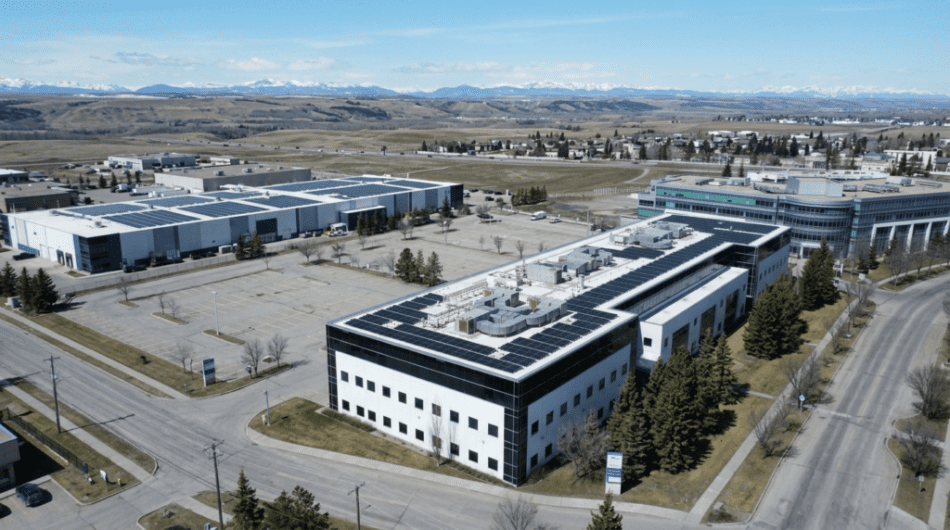
Implementing industrial solar systems in Alberta presents specific challenges that require careful planning and site-specific solutions. Many industrial buildings in the province feature flat or low-slope rooftops, necessitating engineered racking systems for secure anchoring and proper tilt to manage snow accumulation and maximize sunlight capture. This approach differs significantly from residential installations, demanding a tailored strategy for each commercial property.
Furthermore, Alberta’s climate introduces unique considerations. While cold temperatures can enhance panel efficiency, the significant variation in daylight hours between summer and winter, coupled with potential snow loads and wind uplift, means that system design must account for these environmental factors. For instance, rooftop arrays may need to be set back from the perimeter to ensure safe fall protection access, as mandated by local bylaws, impacting the usable area for panel installation. Alberta Regional Dashboard provides data on property specifics that can inform these decisions.
Ridgeline Solar, with over 8 MW of projects managed across Alberta since 2016, offers commercial solar installations designed to address these specific challenges. Our team of Master Electricians and Alternative Energy Technologists ensures that each system meets rigorous safety and performance standards, balancing the need for robust infrastructure with optimal energy generation. We provide real-time energy monitoring services to help industrial clients track performance and maximize their return on investment. For those considering an industrial solar system in Alberta, we can be reached at (780) 499-6831.
Alberta’s Climate Impact on Industrial Solar
Alberta’s climate presents unique opportunities and challenges for industrial solar systems. The province receives abundant sunshine, with areas like Calgary and Edmonton experiencing over 2,300 hours of sun annually, ranking it second in solar potential across Canada. This sunny disposition, combined with cold winter temperatures, can actually enhance the efficiency of modern monocrystalline silicon panels. For instance, panels can see a measurable power output increase at -10°C, and studies show that a 500W panel can produce closer to 540-560W at -25°C, a significant cold-weather bonus.
However, Alberta’s weather demands careful system design. Industrial buildings, especially those in Nisku, often feature flat or low-slope roofs that must contend with heavy snow loads, strong winds, and freeze-thaw cycles. Snowfall can temporarily reduce production, but panels installed at typical Alberta angles (30-45 degrees) often shed snow within 1-3 days, with annual snow-related losses averaging around 3% for pitched roofs. For flat roofs, specialized engineered racking systems are necessary to ensure secure anchoring and optimal tilt for both sun capture and effective snow management. We ensure every installation accounts for these factors, designing systems built for the long haul.
| Climate Factor | Impact on Industrial Solar |
|---|---|
| Sunshine Hours (Annual) | Alberta averages over 2,300 hours of sunshine annually in key areas, providing a strong foundation for solar energy generation. Southern and eastern regions typically receive higher solar irradiation. |
| Cold Temperatures | Modern monocrystalline solar panels often perform more efficiently in cold weather. Power output can increase measurably at temperatures below freezing, such as -10°C to -25°C, providing a performance bonus during winter months. |
| Snowfall | Pitched roofs benefit from natural snow shedding, with annual losses around 3% for panels at typical Alberta angles. Flat roofs require specialized racking to manage snow loads and ensure proper tilt for optimal collection and melt-off. |
| Wind Conditions | Strong winds, such as Calgary’s chinook winds exceeding 100 km/h, necessitate robust mounting solutions and secure perimeter designs to withstand uplift forces and ensure system integrity. |
| Seasonal Daylight Variation | Peak summer daylight can extend to around 17 hours, maximizing solar irradiance. Conversely, winter solstice brings under 7 hours of daylight, requiring systems to prioritize late-morning sun or pair with energy storage for consistent output. |
Seasonal daylight variations significantly influence production cycles. While winter months (November to February) contribute approximately 15-25% of annual solar output, the majority (75-85%) occurs from spring through fall. Alberta’s net metering policies allow businesses to bank surplus summer energy at retail rates, helping to offset winter consumption and ensure year-round economic viability for industrial solar investments. When considering a system, we evaluate how these seasonal shifts align with your facility’s energy usage patterns to maximize your return.
Choosing the Right Industrial Solar Solution
Selecting an appropriate industrial solar system for Alberta businesses involves assessing specific site conditions and energy demands. Flat roofs, common on many industrial buildings, present unique challenges and opportunities for solar array design, often requiring engineered racking systems to ensure proper tilt and secure anchoring. This careful planning is key to optimizing energy capture and managing snow loads effectively throughout the year.
Businesses considering solar power in Alberta need to evaluate the types of technologies available and how they perform under local climate conditions. Modern solar panels are built to withstand Alberta’s weather, but the specific design and mounting solutions must account for factors like heavy snow, wind uplift, and freeze-thaw cycles. Understanding these site-specific needs helps in choosing a system that delivers reliable, long-term energy production and financial benefits.
Ridgeline Solar offers expertise in designing and installing commercial solar panel systems across Northern Alberta. Our team comprises Master Electricians and Alternative Energy Technologists who are members of the Solar Energy Society of Alberta (SESA). We ensure every industrial and commercial solar system meets stringent safety and performance standards, providing real-time energy monitoring services to help clients track performance and optimize output.
| Product | Best for | Budget | Reason |
|---|---|---|---|
| Monocrystalline Solar Panels | Businesses prioritizing consistent energy production across varying temperatures. | Quote; varies with system size and panel efficiency. | Their superior temperature coefficient allows for more stable power output as ambient temperatures fluctuate, which is beneficial in Alberta’s climate. |
| Engineered Racking Systems for Flat Roofs | Facilities with flat or low-slope rooftops. | Quote; varies with roof size and system complexity. | These systems provide secure anchoring and the necessary tilt for optimal sunlight capture and snow management on non-sloped surfaces. |
| Tilt-Frame Systems | Warehouses with low-pitch metal-deck roofs and those needing to boost panel tilt for year-round production. | Quote; varies with system size and tilt angle. | They help maximize solar energy capture by adjusting the panel angle, which is particularly useful for buildings with limited roof pitch. |
Nisku Warehouse Roof Solar Project Scenario
Businesses across Alberta are increasingly exploring industrial solar systems to manage energy costs and enhance sustainability. However, the decision to invest in such a system involves navigating complex installation logistics and understanding regional climate impacts on performance.
Arthur is evaluating industrial solar systems for his facility and is weighing the benefits of panels that perform better in Alberta’s frigid winters against those that excel during warmer months. He needs to decide which type of system best aligns with his operational needs and the local climate, asking himself: Should Arthur prioritize a system optimized for cold-weather performance or one that maximizes peak summer sun capture for his facility?
Recommendation: Monocrystalline Solar Panels
Ridgeline Solar recommends commercial solar panel installations tailored to Alberta’s climate, which often see enhanced power output in cold temperatures like -10°C, to help reduce operating costs and boost sustainability.
## Our Industrial Solar Installation Services Ridgeline Solar designs and installs industrial solar systems to help businesses across Northern Alberta reduce operating expenses and enhance sustainability. With over 8 MW of projects completed since 2016, our team brings extensive experience to every commercial installation. We offer a full suite of services to manage your project from initial consultation through system monitoring. Our expertise extends across Northern Alberta, serving businesses in cities such as Edmonton, Cold Lake, Bonnyville, Camrose, Wetaskiwin, Westlock, and Athabasca. We manage every phase of your solar project, from initial assessments and system design to final installation and ongoing performance monitoring. Our approach ensures that your industrial solar system is tailored to meet your specific energy needs and operational requirements, aligning with both financial and environmental objectives. We provide real-time energy monitoring services to help industrial clients track system performance, optimize energy output, and maximize the return on their solar investments. Our commitment to safety and performance is backed by a team of Master Electricians and Alternative Energy Technologists, all members of the Solar Energy Society of Alberta (SESA). This dedication guarantees that every industrial and commercial solar system we install meets the highest safety and performance standards.
| Service Name | Description |
|---|---|
| Commercial Solar Panel Installation | We design and install custom solar panel systems for businesses throughout Northern Alberta. This includes optimizing system size, panel placement, and equipment selection to maximize energy production and reduce operating costs for industrial facilities. We work with various roof types, considering factors like snow load and wind resistance specific to Alberta’s climate. |
| System Design and Engineering | Our engineering team develops detailed solar system designs, taking into account your facility’s unique characteristics, energy consumption patterns, and Alberta’s climate conditions. This includes calculations for tilt angles, array layouts, and structural integrity to ensure optimal performance and longevity. We also handle interconnection agreements and permitting processes. |
| Real-Time Energy Monitoring | Post-installation, we offer advanced energy monitoring services. This allows industrial clients to track their solar system’s performance in real-time, identify any potential issues quickly, and optimize energy output. This data helps in maximizing the return on investment and ensuring the system operates at peak efficiency. |
| Site Assessment and Consultation | We begin by conducting a thorough assessment of your industrial site, evaluating roof condition, available space, sun exposure, and energy usage. This helps us determine the most effective and economically viable solar solution for your specific business needs. |
MANDATORY: Include at least 2 anchor placeholders in this body H2 section (target 3 when this section has a table or 3+ paragraphs). Weave into prose and table cells. Use distinct plan queries when LINK TARGETS PLAN is present. Format is exactly anchor — never {{LINK:…}}, {LINK:…}, or raw https:// internal URLs in body sections.
Follow the section block for lists or quotes. Quotes: start the line with > then a space then the sentence (example: > We size each array for the roof). Forbidden: wrapping the quote with the word blockquote, in the article, or HTML quote tags. Use Markdown pipe tables only. NEVER HTML. NO LINK-ONLY TABLE COLUMNS (ZERO TOLERANCE): Never add a column for links alone. Forbidden headers: Link, Links, Direct Link, Learn More, View Product, URL, Relevant Internal Links, or any link-only column. Put links inside substantive cells (names, descriptions, benefits) only. Same-site links in cells: anchor only. Never [text](…) and never raw same-site .
User-specified externals only: weave exact-anchor mid-sentence in a paragraph (same rules as ]). Copy exact URL and anchor from APPROVED EXTERNAL URLs — never bare domain, never ‘for more’/’here’, never after the final period. — PLACE ENTITY (MANDATORY — from research brief / SAP row) —
Canonical entity: industrial solar
Prose label: industrial solar
City: industrial solar
Service topic (prose): systems alberta
Refer to the place only with comma grammar from the entity label above.
Allowed reference forms (vary naturally):
– “industrial solar”
– “industrial”
Forbidden in body copy:
– Concatenating neighborhood + city without a comma (slug-style place names)
– Repeating the full SEO focus keyword with every place mention when it embeds location tokens
– “industrial solar” (no comma between place segments)
– “systems alberta industrial solar”
– “the perfect systems alberta industrial solar needs”
— END PLACE ENTITY —
Entity: industrial solar. Use varied phrases: “near industrial solar”, “in the industrial solar area”, “by industrial solar”, “around industrial solar”, “in the vicinity of industrial solar”, “close to industrial solar”. Place phrases: “work near industrial solar”, “jobs in the industrial solar area”, “homes near industrial solar”, “projects by industrial solar”. Local landmark/climate/process only if present in master instructions, GBP, inventory, existing HTML, or audit blocks; otherwise omit. Reduce keyword repetition with semantic product/topic variants — not hollow team filler. Short anchors (2–5 words). No nested anchors.
Service topic for prose: “Systems Alberta”. Full SEO keyword “industrial solar systems alberta” is metadata-only — do not paste the geo-stuffed slug in body copy. Never use , , or bracket placeholders. Never fake team lists or write “our team” / “our professionals”. Use the connected business name or we plus a sourced concrete detail. Links: Internal = only when natural via anchor. User-specified externals only: exact-anchor copied from the APPROVED EXTERNAL URLs block — never [anchor](url). No other third-party sites. NEVER link to competitors. No “External Resources” sections.
Local Recommendation for Industrial Solar
Selecting the right industrial solar system in Alberta involves aligning specific business needs with the province’s unique climate and regulatory environment. For businesses operating in the industrial solar sector, prioritizing systems that account for Alberta’s significant temperature variations and potential for heavy snowfall is key to ensuring consistent energy generation and a strong return on investment. As Ridgeline Solar, we have managed over 8 MW of projects across Alberta, assisting numerous companies in reducing operating costs through tailored solar solutions.
Our experience shows that the optimal industrial solar system choice often depends on factors such as roof structure, specific operational energy demands, and the business’s long-term sustainability objectives. We recommend carefully evaluating panel technology and mounting systems to ensure durability and performance against Alberta’s distinct weather patterns. For example, a roof structure rated for heavy snow loads, as seen in facilities built in 2024, requires reinforced frames and specific edge guards to manage snow drift effectively, a detail we account for in our designs.
| Product | Best for | Budget | Reason |
|---|---|---|---|
| Monocrystalline Panels with Enhanced Temperature Coefficient | Facilities prioritizing consistent energy output across Alberta’s wide temperature fluctuations, from summer heat to winter cold. | Quote; varies with system size and specific panel tier. | These panels offer a superior temperature coefficient, leading to more stable power output when ambient temperatures shift, a significant advantage in Alberta’s climate. |
| Engineered Racking Systems for Flat Roofs | Industrial buildings with flat or low-slope rooftops, common in many Alberta facilities, requiring secure anchoring and optimal tilt. | Quote; varies with roof area, material, and system complexity. | Specialized racking systems ensure panels are securely attached and positioned for maximum sunlight capture and effective snow management, protecting roof integrity. |
| Tilt-Frame Systems for Low-Pitch Roofs | Warehouses with low-pitch metal-deck roofs (e.g., 1:12 to 2:12) that are prevalent in older industrial areas. | Quote; varies with roof area and tilt angle requirements. | These systems are designed to boost panel tilt, optimizing year-round production by improving sun exposure, especially crucial for structures with limited roof pitch. |
| Building-Integrated Photovoltaics (BIPV) | New construction or major renovations where solar panels can serve as both a power source and building cladding. | Quote; typically higher upfront cost but potential material savings. | BIPV offers design flexibility with various colors and patterns, potentially reducing capital costs by integrating solar into the building envelope itself, supported by provincial interest in this technology. |
For industrial facilities seeking to enhance their energy independence and reduce operating expenses, selecting the appropriate solar system is a strategic decision. Ridgeline Solar specializes in assessing these site-specific needs, coordinating with local bylaws like Alberta Bylaw 1470-A61 concerning rooftop set-backs, and implementing robust solutions designed for Alberta’s climate.
Next Steps for Industrial Solar in Alberta
Implementing industrial solar systems in Alberta involves a structured approach to ensure compliance and optimal system performance. Taking the right steps now can help your business secure long-term energy cost savings and sustainability benefits. Engaging with qualified professionals early in the process is key to a successful project.
We have been a trusted solar panel installer since 2016 and have constructed and managed over 8 MW of projects for a variety of commercial, residential, and utility customers across Alberta. Our team comprises Master Electricians and Alternative Energy Technologists who are members of the Solar Energy Society of Alberta (SESA), ensuring each industrial and commercial solar system meets stringent safety and performance standards.
For inquiries or to request a free estimate on an industrial solar system in Alberta, Ridgeline Solar can be reached at (780) 499-6831. We offer commercial solar panel installations designed to reduce operating costs and enhance sustainability for businesses throughout Northern Alberta, including Edmonton, Cold Lake, Bonnyville, Camrose, Wetaskiwin, Westlock, and Athabasca.
- Consultation and Site Assessment: The initial step involves a detailed assessment of your facility’s energy needs and roof structure. This phase confirms system suitability and identifies any specific site challenges, such as those found on flat roofs in Nisku industrial properties where snow loads and wind uplift are significant considerations.
- System Design and Proposal: Based on the assessment, a custom solar system design will be developed. This proposal will outline the proposed equipment, projected energy production, and associated costs, taking into account Alberta’s climate data for specific site matching.
- Permitting and Interconnection: Navigating local municipal bylaws and utility interconnection agreements is a crucial part of the process. For instance, Nisku’s industrial lots along 39 Avenue require rooftop arrays to be set back at least 1 m from the roof perimeter per Alberta Bylaw 1470-A61, a detail handled during this phase.
- Installation and Commissioning: Once permits are secured and equipment is ordered, the installation begins. Our teams, experienced with Alberta’s varied weather, focus on secure mounting solutions and efficient system configuration.
- Monitoring and Maintenance: Following installation, real-time energy monitoring services help industrial clients track performance, optimize output, and maximize the return on their solar investments.
FAQ
This section addresses common questions about industrial solar systems in Alberta, offering further insights into their performance, installation, and economic benefits for businesses.
| Question | Answer |
|---|---|
| How do Alberta’s cold winter temperatures affect industrial solar panel performance? | Modern monocrystalline silicon panels often perform more efficiently in cold weather. For example, power output can measurably increase at -10°C, with a significant bonus observed at -25°C. This cold-weather efficiency is a benefit for industrial solar systems in Alberta. |
| What are the main challenges for installing industrial solar systems on flat roofs in Alberta? | Flat or low-slope roofs common on Alberta industrial buildings require specialized engineered racking systems. These systems are necessary for secure anchoring and to provide the proper tilt for optimal sunlight capture and effective snow management. |
| How does Alberta’s net metering policy help businesses with industrial solar systems? | Alberta’s net metering policies allow industrial facilities to bank surplus electricity generated during sunny summer months at retail rates. This banked energy can then be used to offset electricity consumption during winter months, ensuring year-round economic viability. |
| Should Arthur prioritize cold-weather performance or peak summer sun capture for his Alberta facility’s solar system? | For an Alberta facility, prioritizing monocrystalline solar panels is recommended. These panels often show enhanced power output in cold temperatures, which can help reduce operating costs and boost sustainability throughout the year. |


